
Socket cap, countersunk, button or grub: choosing Allen screws
Hex socket screws, the ones driven with an Allen key, come in four heads: the socket cap screw (DIN 912), the countersunk (DIN 7991), the button head (ISO 7380) and the headless grub screw (DIN 916). They share a small drive that works where a spanner will not fit and a thread that is usually cut to the strongest class on the shelf, 12.9. Picking the head is a question of what the screw must sit in, how flush it must be, and how much torque it has to take.
Everything below is stocked in metric coarse sizes from M3 to M24 in 12.9 black, with stainless A2 and UNC and BSW threads for most heads.
Socket cap screw, DIN 912: the workhorse
A cylindrical head with a deep socket, made to sit in a counterbored hole so the top is flush with the surface. The head is as strong as the shank, which is why machinery, moulds, jigs, pumps and gearboxes are built with DIN 912 in class 12.9. Where the hole is not counterbored the head stands proud, so leave room for the key. Use a washer only if the part under the head is soft; the head bears well on steel.
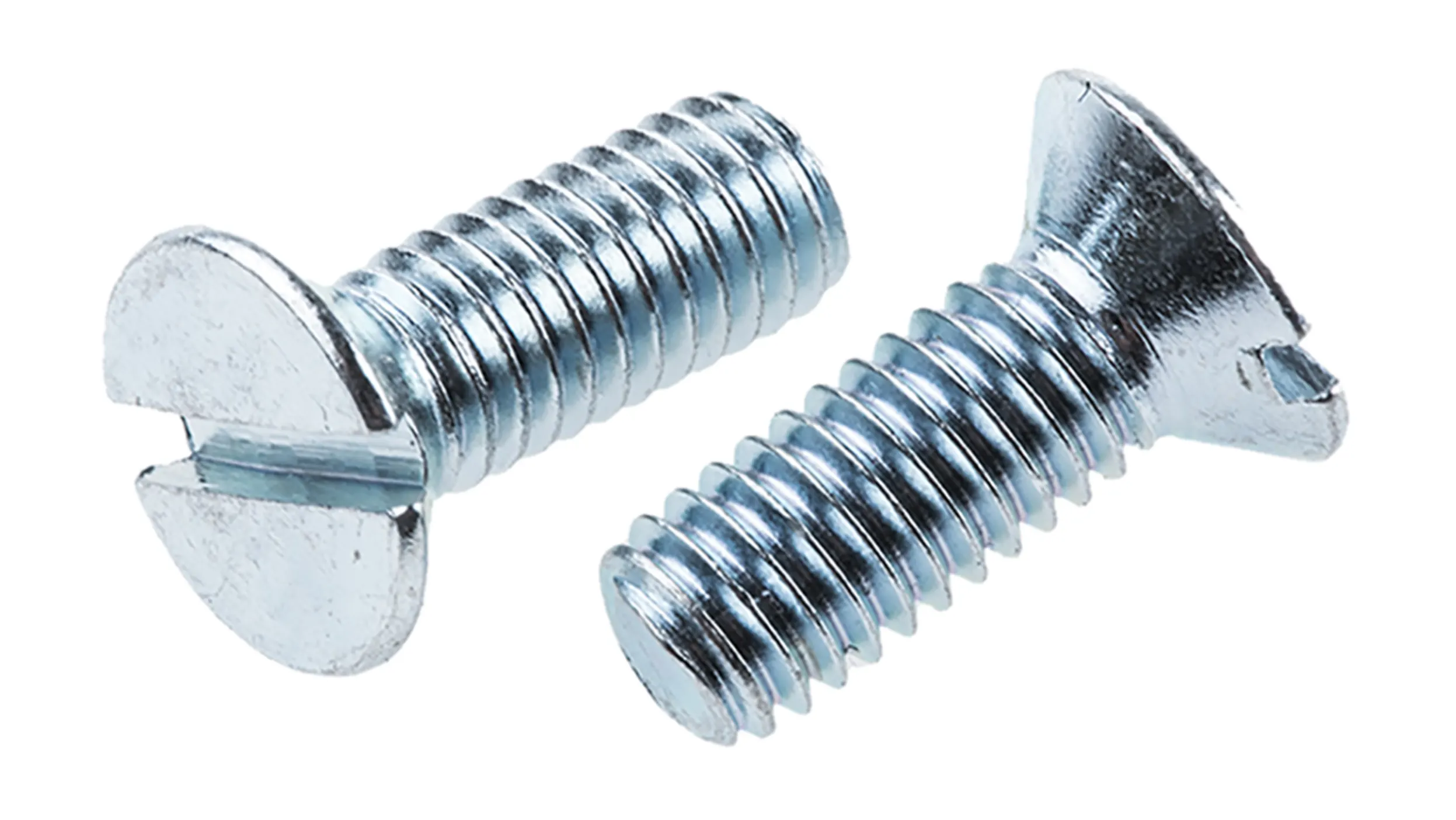
Countersunk socket screw, DIN 7991: flush surfaces
A 90-degree countersunk head that finishes level with the surface, for guards, covers, hinges, slide rails and anywhere a proud head would catch. The countersink must match the head angle and depth or the screw will sit high or crack the part. The head is shallower, so it takes a smaller key and less torque than a cap screw of the same size, and it is not the choice for a highly loaded joint.
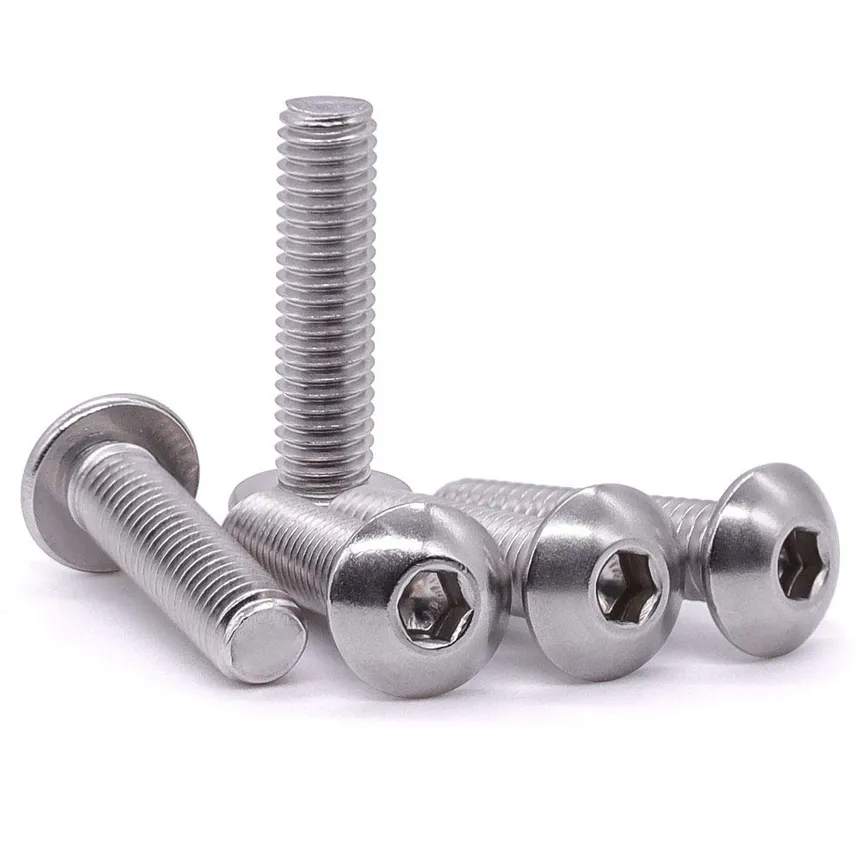
Button head screw, ISO 7380: low, rounded, finished
A low dome with a shallow socket. It is the head for panels, guards, trim and enclosures where the fixing is seen and nothing should snag on it. Because the socket is shallow, over-tightening rounds the key; tighten to the fastener's own torque, not to the feel of a cap screw. Stainless A2 button heads are the common pick for food, water and outdoor equipment.
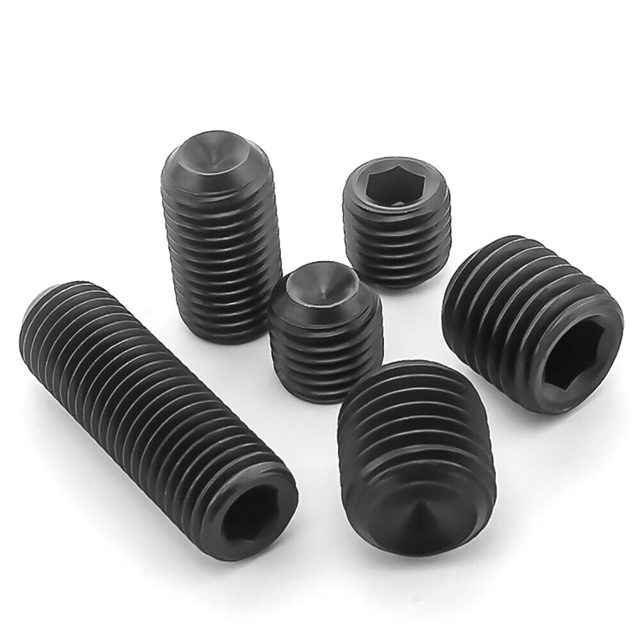
Grub screw, DIN 916: no head at all
A grub, or set, screw is a threaded pin with a socket in one end and a point in the other, sunk fully into a tapped hole to lock a collar, pulley, coupling or shaft. The point does the work: a cup point bites into the shaft and is the standard supply; flat and cone points are for softer or pre-drilled shafts; a dog point locates in a drilled seat. Grub screws loosen under vibration, so use a thread locker or fit two screws at 90 degrees on anything that spins.
Grade: 12.9 black or A2 stainless
Black 12.9 is the default for machine work: the highest tensile class in the range, with the plain oxide finish for indoor, oiled use. Choose A2 stainless where the screw is damp, seen or in contact with food, and accept a lower strength, roughly that of a class 8.8 steel screw. Stainless on stainless galls under torque, so lubricate the thread or use a nylon patch screw. Our guide to bolt grades has the numbers behind 8.8, 10.9 and 12.9.
Hex key size for each screw, metric
| Size | Cap DIN 912 | Countersunk DIN 7991 | Button ISO 7380 | Grub DIN 916 |
|---|---|---|---|---|
| M3 | 2.5 mm | 2 mm | 2 mm | 1.5 mm |
| M4 | 3 mm | 2.5 mm | 2.5 mm | 2 mm |
| M5 | 4 mm | 3 mm | 3 mm | 2.5 mm |
| M6 | 5 mm | 4 mm | 4 mm | 3 mm |
| M8 | 6 mm | 5 mm | 5 mm | 4 mm |
| M10 | 8 mm | 6 mm | 6 mm | 5 mm |
| M12 | 10 mm | 8 mm | 8 mm | 6 mm |
| M16 | 14 mm | 10 mm | 10 mm | 8 mm |
Socket screws from our range
This fastener is a stainless steel cap screw designed with an internal hexagonal drive. It features an M8 nominal diameter and a 30 length with full thread coverage along the shank. The item conforms to DIN 912 standards and carries an A2 property class designation.
per Pcs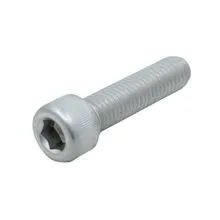
Questions buyers ask
What is the difference between a socket cap screw and a hex bolt?
The drive and the head. A socket cap screw is driven from inside its cylindrical head with a hex key and sits in a counterbore; a hex bolt is turned from outside with a spanner. Cap screws fit where there is no room to swing a spanner and are usually supplied in the stronger 12.9 class.
Can I replace a 12.9 cap screw with a stainless one?
Not one for one in a loaded joint. A2 stainless is roughly class 8.8 in strength, so the joint may need a larger size or more screws. For damp or visible fixings that are not highly loaded, stainless is the better choice.
Why do my grub screws keep loosening?
Vibration and a point that does not bite. Use a cup point on a plain shaft, torque it properly, add a thread locker, and on couplings fit a second screw at 90 degrees.
Do button head screws take the same torque as cap screws?
No. The shallow socket and low head mean less torque before the key rounds; tighten to the button head's own figure and use a cap screw where the joint carries load.