
HSS, cobalt or SDS: the right drill bit for steel, stainless and concrete
Use a high-speed steel (HSS) bit for mild steel, aluminium, wood and plastic; a cobalt HSS bit for stainless and hardened steel; and an SDS Plus or SDS Max carbide bit in a rotary hammer for brick, block and concrete. A blunt hole, a smoking bit or a chewed chuck nearly always means the wrong bit, the wrong speed, or hammer action switched on where it should not be.
The three families are not interchangeable: an HSS bit will not survive hammer action, and an SDS bit will not grip in a keyed or keyless chuck without an adaptor.
HSS jobber bits, DIN 338: metal, wood and plastic
The everyday twist drill. DIN 338 fixes the length for each diameter (a 10 mm bit is 133 mm overall with an 87 mm flute), so a replacement from any maker fits the same job. A 118-degree point needs a centre punch to start; a split point, such as the Bosch PointTeQ range, starts on the mark without walking. Run them at the speed the diameter asks for: around 1,500 rpm for a 4 mm bit in mild steel, falling to about 600 rpm at 10 mm and 300 rpm at 20 mm, with firm pressure and cutting oil. Use a pilot hole of about a third of the final size for anything above 10 mm.
Cobalt bits: stainless and hard steel
Cobalt bits are HSS with 5 to 8 percent cobalt alloyed through the steel, not a coating, so they hold their edge at the heat stainless generates. Stainless work-hardens when a bit rubs instead of cuts, so drill at half the speed you would use for mild steel, keep the pressure on so the bit is always cutting, and use cutting fluid. The same bits suit spring steel, cast iron and welds. A titanium-coated bit is cheaper but the coating goes with the first sharpening; cobalt is the same alloy all the way through.
SDS Plus: brick, block and concrete up to about 26 mm
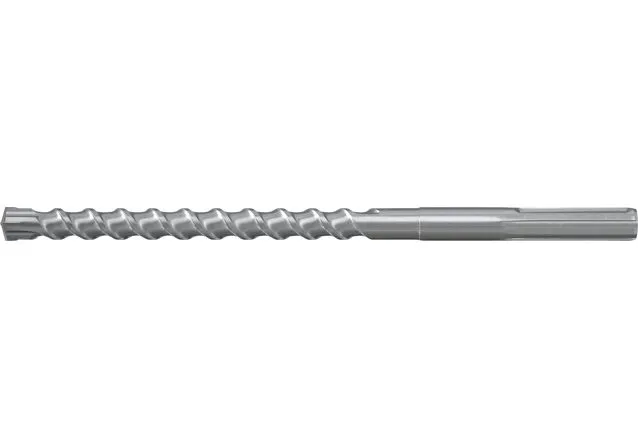
The SDS Plus shank has two grooves that lock into a rotary hammer and let the bit move back and forth while the hammer pounds it. The carbide tip chips the masonry while the flutes clear the dust. Sizes run from 4 mm for plugs and anchors to roughly 26 mm, and the bit is named by three numbers, for example 10/100/160: a 10 mm diameter, 100 mm working length and 160 mm overall, so check the working length covers your anchor depth plus the fixture. Use the hammer setting without drilling into reinforcement; if the bit stops on steel, move the hole.
SDS Max: large holes and breaking
Bigger hammers use the SDS Max shank, which has three grooves and a larger diameter to take the blows of a 5 to 12 kg machine. It is the tool for through-holes from about 20 to 50 mm, core bits, chisels and point breakers. An SDS Max to SDS Plus adaptor lets a large hammer run smaller bits, but a small hammer cannot run SDS Max.
Where holes go wrong
- Hammer action on an HSS bit: the edge shatters. Hammer is for carbide bits in masonry only.
- Too fast in steel: the tip blues and softens. Slow down as the diameter grows.
- Rubbing on stainless: the surface work-hardens and the bit skates. Keep cutting, use cobalt and fluid.
- Wrong working length: the anchor needs more depth than the flute allows. Read the three numbers on the SDS bit.
- Dull bits kept in service: HSS bits can be resharpened; carbide tips cannot be, so replace them.
Which bit for which material
| Material | Bit | How to run it |
|---|---|---|
| Mild steel, aluminium, wood, plastic | HSS DIN 338, split point | Slow down as the diameter grows; pilot above 10 mm |
| Stainless, hardened and spring steel, welds | Cobalt HSS | Half speed, constant pressure, cutting fluid |
| Brick, block, concrete up to about 26 mm | SDS Plus carbide | Rotary hammer, hammer on, mind the rebar |
| Concrete above 20 mm, cores, chiselling | SDS Max carbide | Large hammer; adaptor runs SDS Plus bits |
| Tiles and glass | Spear-point tile bit | No hammer, low speed, water |
Drill bits from our range
The product is a metric HSS drill bit with a 10.0 mm nominal diameter. It is manufactured by BOSCH and features the PointTeQ tip technology. The drill bit is constructed from High Speed Steel.
per Pcs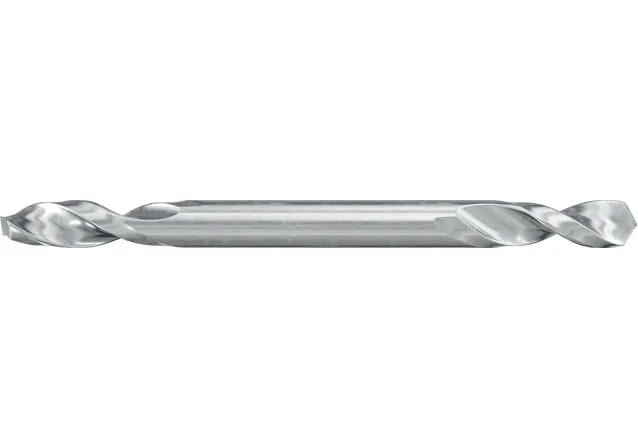
Questions buyers ask
Can I use an SDS bit in an ordinary drill?
Not directly. The SDS shank needs a rotary hammer's chuck; in a keyed or keyless chuck it slips. Use a masonry bit with a round shank in a hammer drill, or an SDS adaptor on a hammer that accepts one.
Cobalt or titanium-coated for stainless?
Cobalt. The cobalt is alloyed through the steel and survives resharpening and heat; a titanium coating is a surface layer that wears through, after which the bit is plain HSS.
What do the numbers 10/100/160 on an SDS bit mean?
Diameter, working length and overall length in millimetres: a 10 mm hole, up to 100 mm deep, on a 160 mm bit. Choose the working length from your anchor depth plus the thickness of the fixture.
Why does my bit go blunt so fast in stainless?
It is rubbing rather than cutting, which hardens the surface it touches. Lower the speed, press harder so the bit keeps taking a chip, use cutting fluid, and switch to a cobalt bit.